




















-3__small.jpg)


__small.jpg)


__small.jpg)


_with_flag,_jason__emily_rowley-4__small.jpg)


-2__small.jpg)



At five years old, Matthew is deeply observant, drawn not to toys first, but to faces. New faces, especially.
His mom, Christina, laughs when she explains it: give Matthew a brand-new toy, and if someone unfamiliar is in the room, he’ll choose eye contact over anything else. He studies people. He connects in his own way.
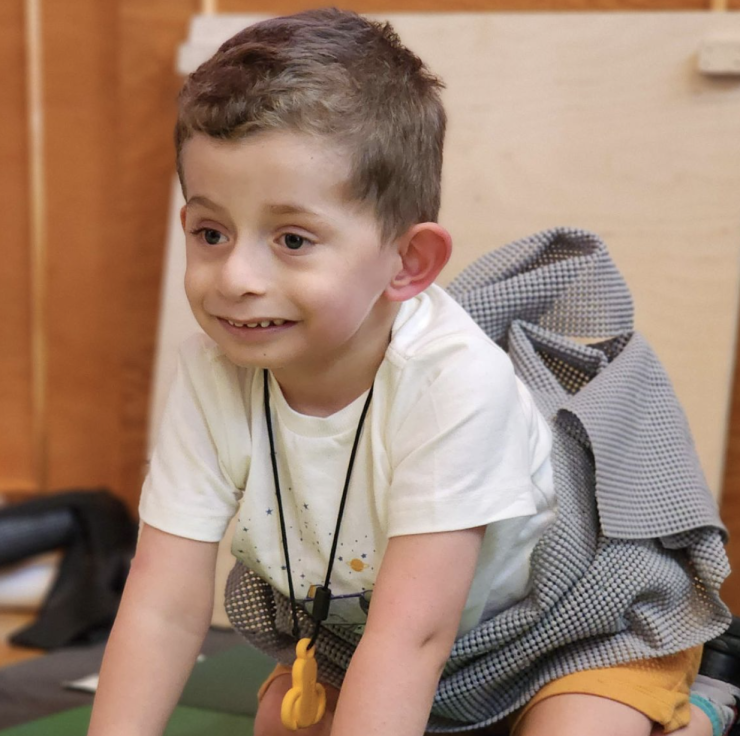
Matthew was diagnosed shortly after birth with Chromosome 8p Inverted Duplication-Deletion Syndrome, a rare genetic condition where, on chromosome 8, one piece is missing and another piece is copied and flipped the wrong way. This means Matthew’s body doesn’t receive the right instructions.
Abnormalities had been detected during Christina’s pregnancy, but it wasn’t until after Matthew was born, following genetic testing and an MRI, that doctors were able to confirm the diagnosis.
Like many parents, Christina had imagined one life while pregnant, and then had to grieve that vision while learning how to care for the child she had just welcomed into the world. Matthew spent his first four weeks in the hospital. When they finally went home, answers were limited, and support was scarce.

“They gave me a booklet,” Christina recalled. “And it was very scary to read.”
The material described extreme cases and unknown outcomes, and there was little guidance about what day-to-day life would actually look like. Christina left early appointments with more fear than clarity. What she did have, though, was Matthew, and a determination to support him in every way possible.
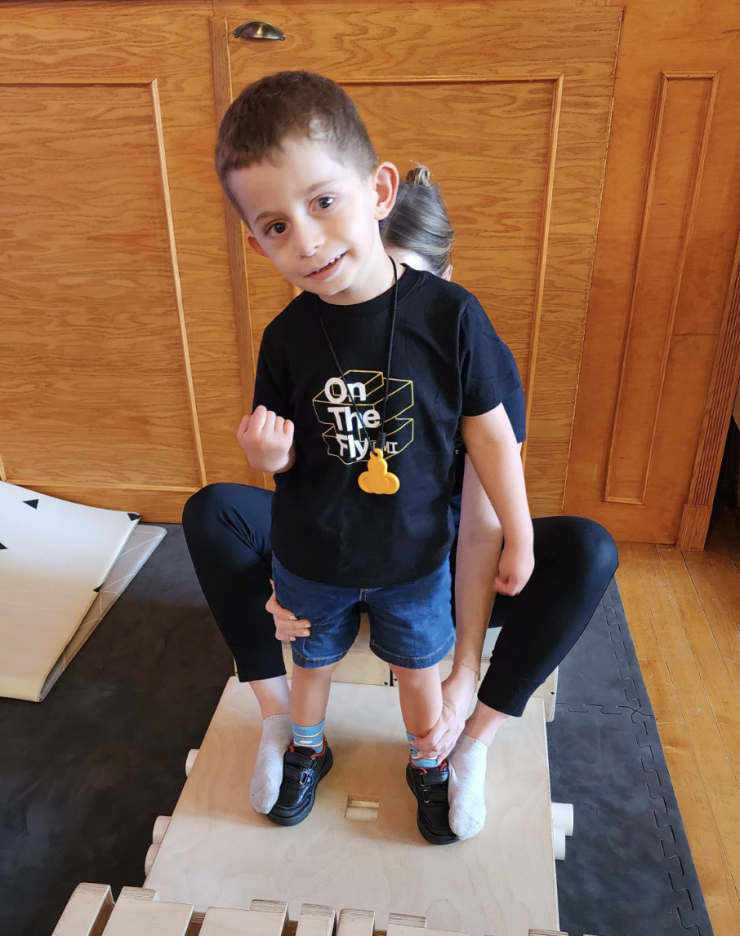
Today, Matthew uses a wheelchair or stroller and requires full-time care. He needs help with all aspects of daily life: eating, toileting, mobility, and communication. He becomes anxious during doctor appointments and is sensitive to sudden loud noises. And yet, within that reality, there is also a lot of happiness.
Matthew loves music—especially songs from Cocomelon (go figure)—and enjoys light-up toys and instruments like the drums and piano. Music comforts him. Faces delight him. Conversation, even nonverbal, matters to him.
Recently, Matthew received a Tobii eye-gaze communication device, and Christina is hopeful it will give him a new way to express his needs and wants.
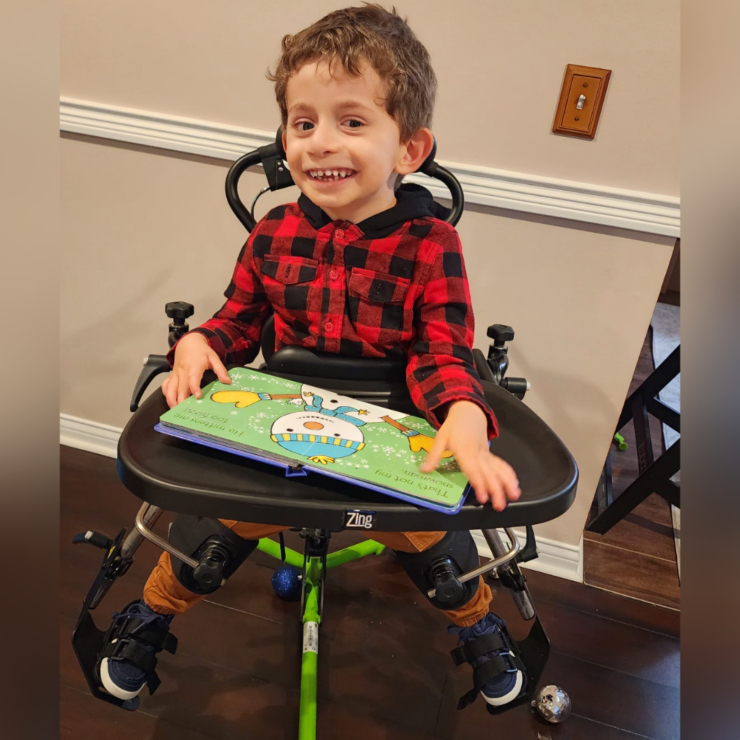
“Even just being able to tell us basic things—food, water, pain—that would be huge,” she said.
Matthew also goes to school each morning, where he rides the bus and spends time with classmates and teachers who adore him. His teacher notices immediately when something is off. “He’s happy most of the time,” Christina explained. “So if he’s sad, we know something’s wrong.”
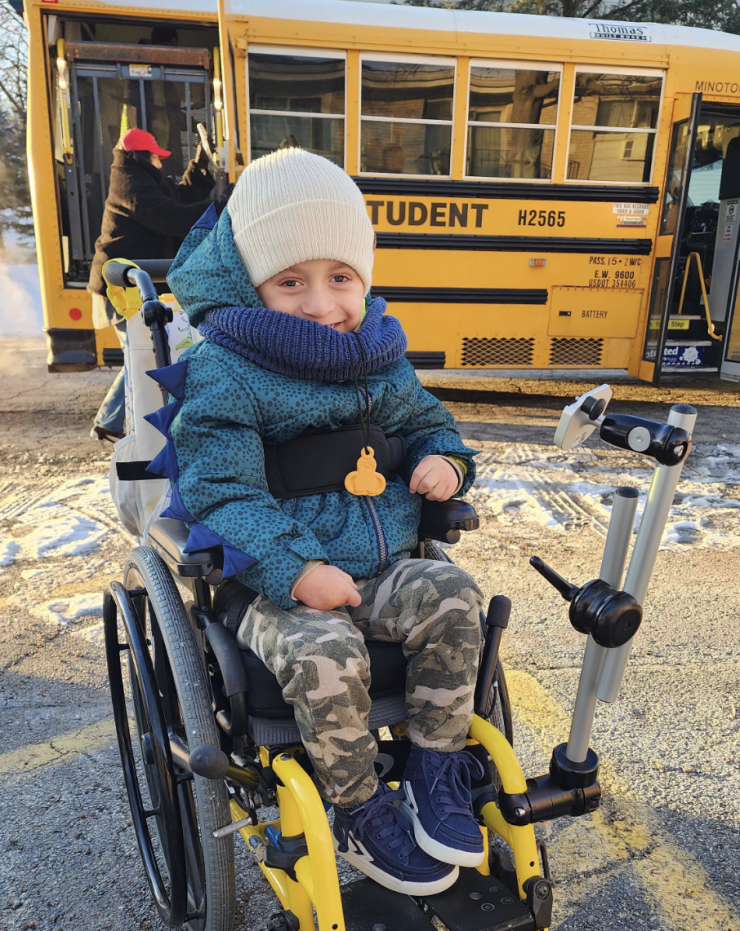
For Matthew, progress has never come quickly or easily. Before his family began pursuing intensive therapy, improvements were painfully slow. But everything changed when they began intensive programs.
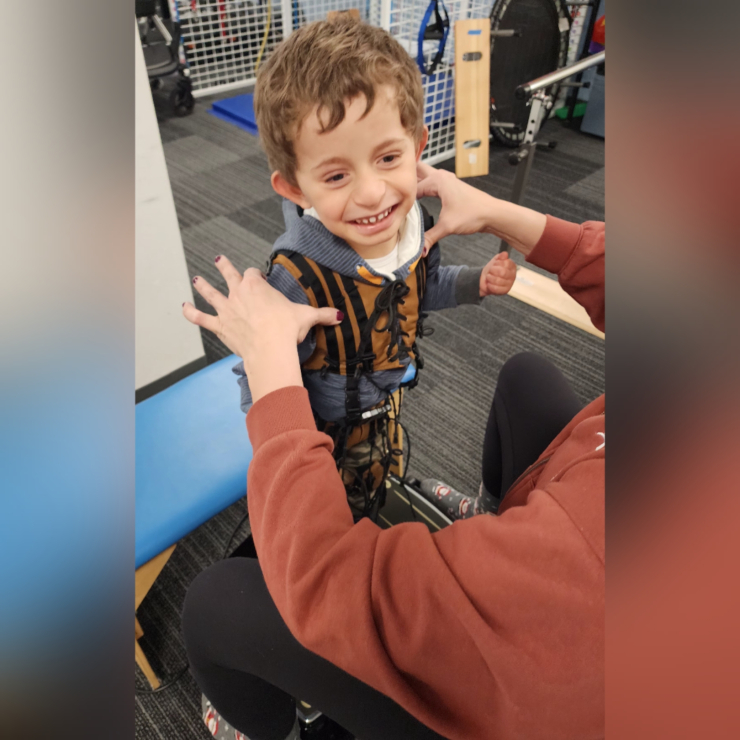
Matthew has now completed nine or ten intensive therapy sessions, including multiple visits to the NAPA Center. Each one looks a little different. Some gains are obvious. Others are quieter but just as important.
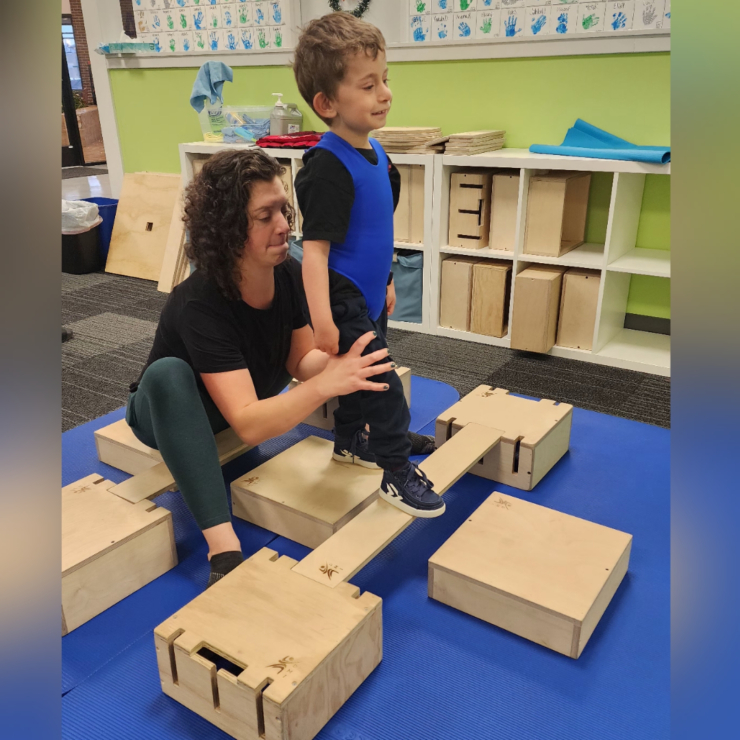
“He’s growing so much,” she said. “Every time he grows, it’s harder to do the same things. The intensives help him get stronger than before, but also help him keep the abilities he already has.”
The milestones Matthew has reached are deeply meaningful to his family. Sitting up independently. Pulling himself into tall kneeling at the couch.
And during his most recent intensive, Matthew walked on a treadmill at 0.9 miles per hour while holding onto bungees with both hands.
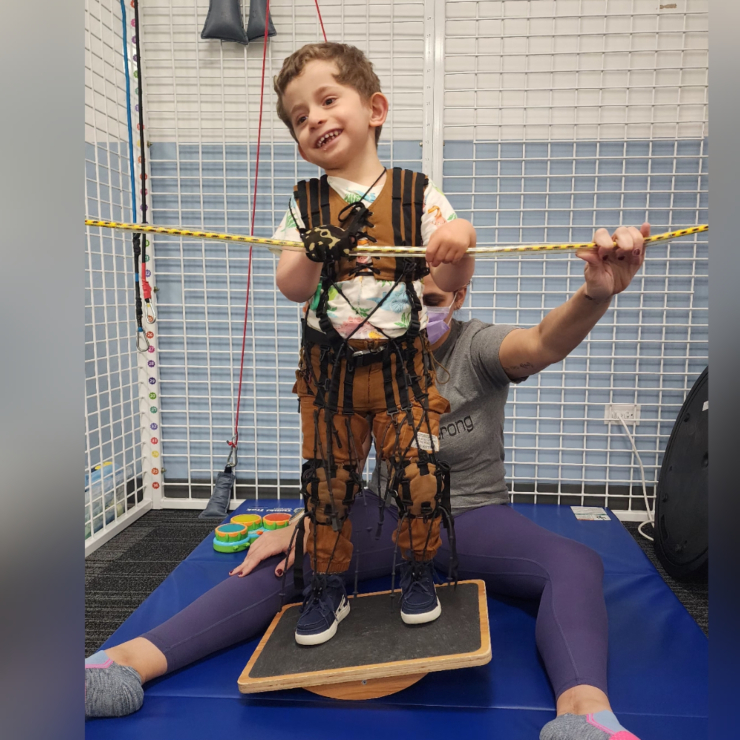
“He did phenomenally well,” Christina told us. “I never thought he’d be able to do some of these things.”
He isn’t independent yet, but he’s learning. Step by step. Day by day.
When asked what she wishes others understood about caring for a child with high needs, Christina pauses. Then she speaks not just for herself, but for countless parents who receive a diagnosis they never expected.
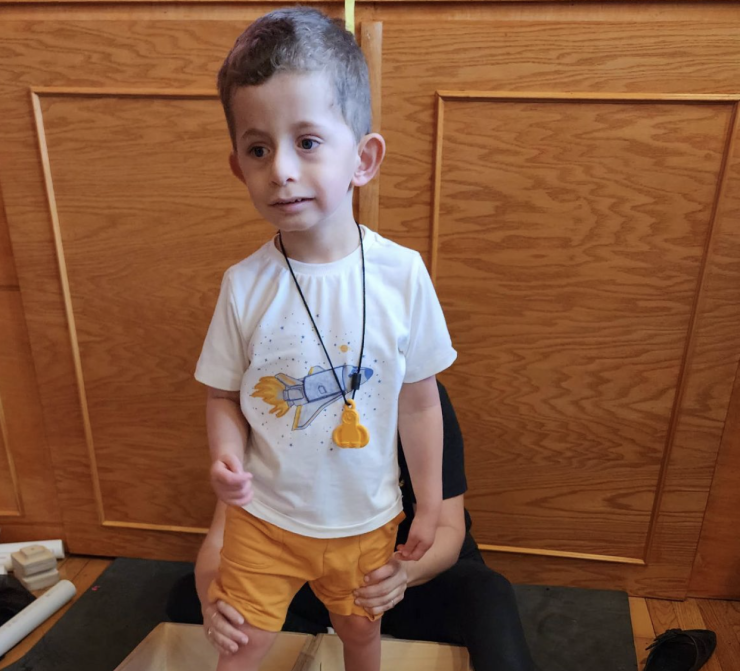
“At first, it feels like the world has collapsed,” she says. “You think you’ll never be happy again.” But that fear, she explains, isn’t the truth. Joy still exists; it just looks different. And sometimes, those differences bring deeper gratitude.
“A typical parent might not even think twice about certain moments,” she shared. “But for us, seeing Matthew sit up on a sled and smile—that’s huge.”

Christina is clear about one thing she wants people to know: children with disabilities are happy. They are worthy. And they deserve acceptance, opportunity, and access. Too often, she says, life is harder not because of disability itself, but because the world fails to accommodate it.
Matthew’s family continues to advocate fiercely for him, and with support from Chive Charities, they’re able to keep moving forward.
Thanks to a $9,100 grant made possible through your support, Matthew will attend another intensive therapy session at the NAPA Center in Chicago, where he’ll continue building strength, confidence, and momentum.
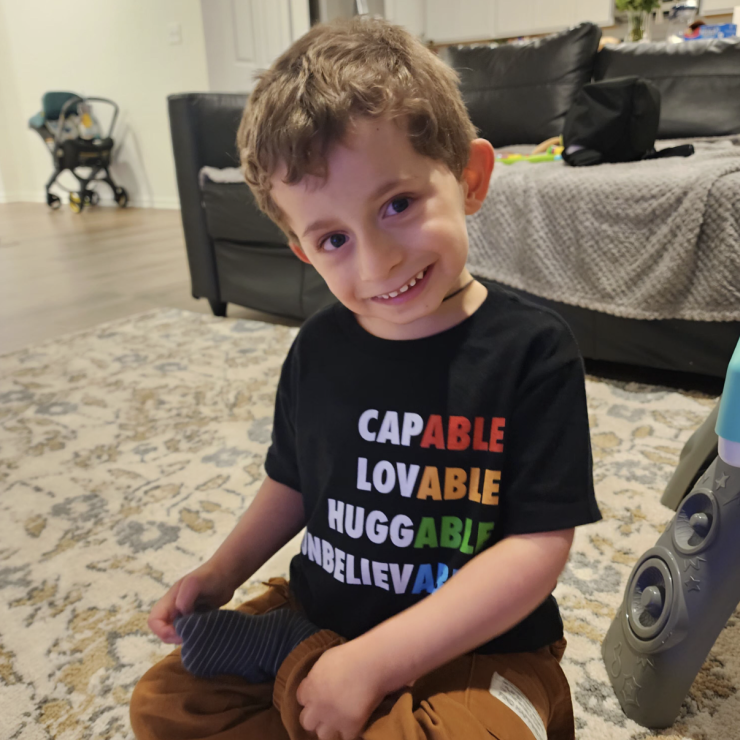
“We’re so thankful,” Christina said. “It’s so helpful. We really appreciate it.”
At Chive Charities, we believe progress doesn’t have to be loud to be life-changing. Sometimes, it’s measured in eye contact. In confidence. In the courage to keep going. Matthew has so much ahead of him, and with the right support, he’ll keep showing the world exactly who he is.
Join us today and help make progress possible for more kids like him. DONATE HERE.