
















-2__small.jpg)



































-3__small.jpg)


__small.jpg)


__small.jpg)


_with_flag,_jason__emily_rowley-4__small.jpg)


-2__small.jpg)


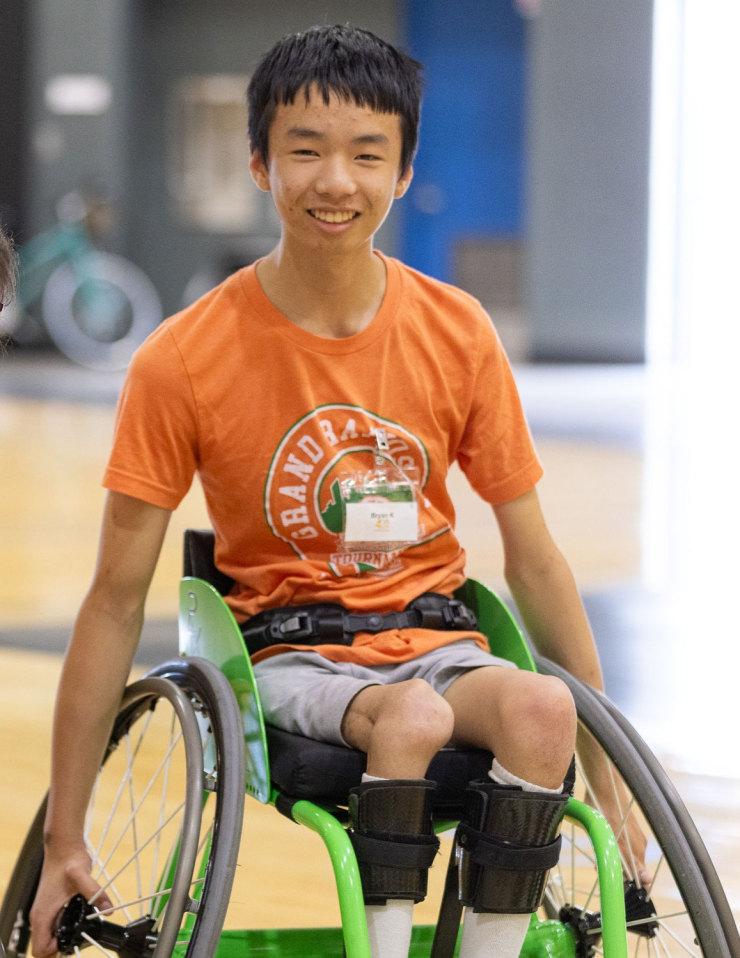
He’s easygoing and kind. The kid who can roll with just about anything, which is no small contribution when you’re the eighth of nine children. If the family pulls out a new game and no one understands the rules, they hand them to Bryan. He’ll figure it out, then teach everyone else.
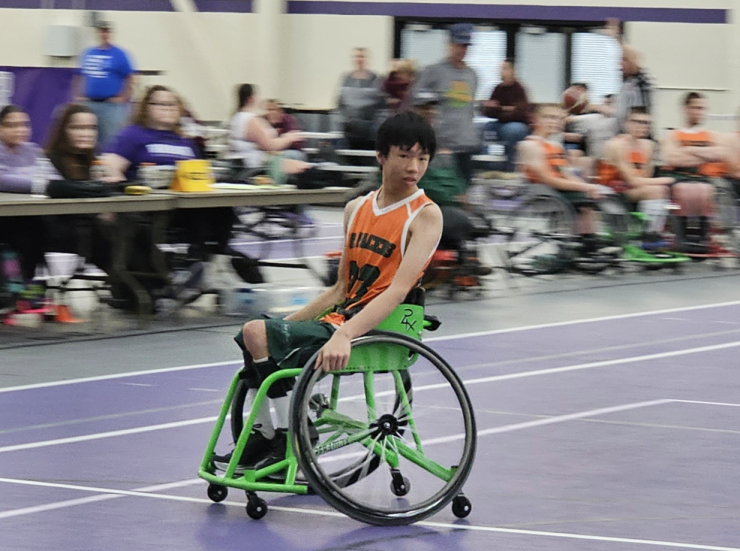
But put him on a basketball court and something changes. Suddenly, the easygoing kid gets competitive.
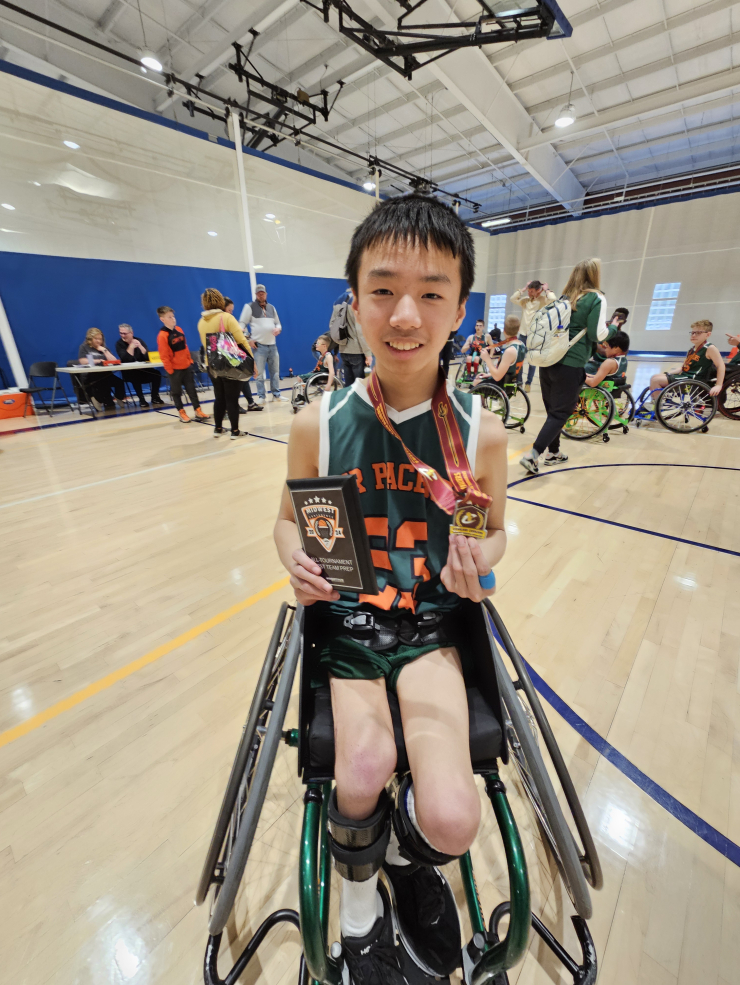
“He’s probably our easiest-going child,” his dad, Eric, told us. “So it’s actually kind of refreshing when he gets out there on the court and we see him asserting himself.”
His mom, Sandy, put it more simply.
“That’s his time to shine.”
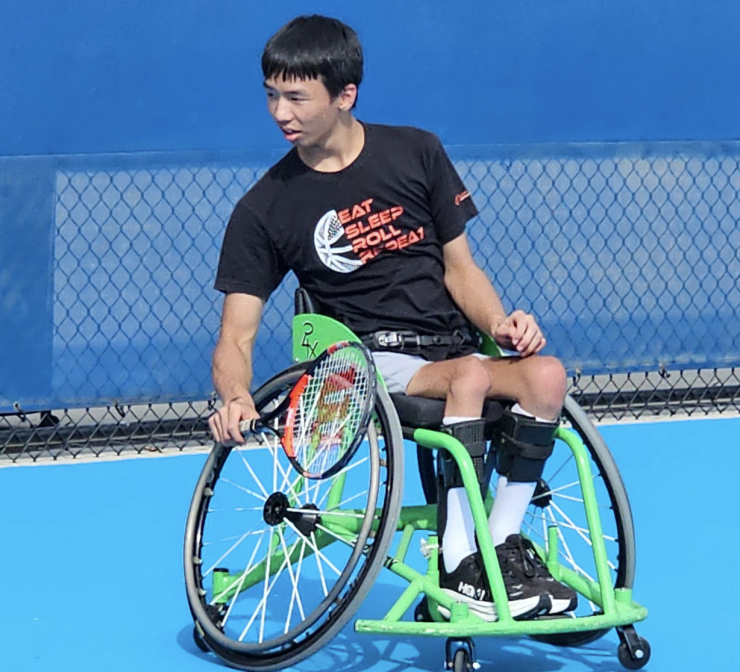
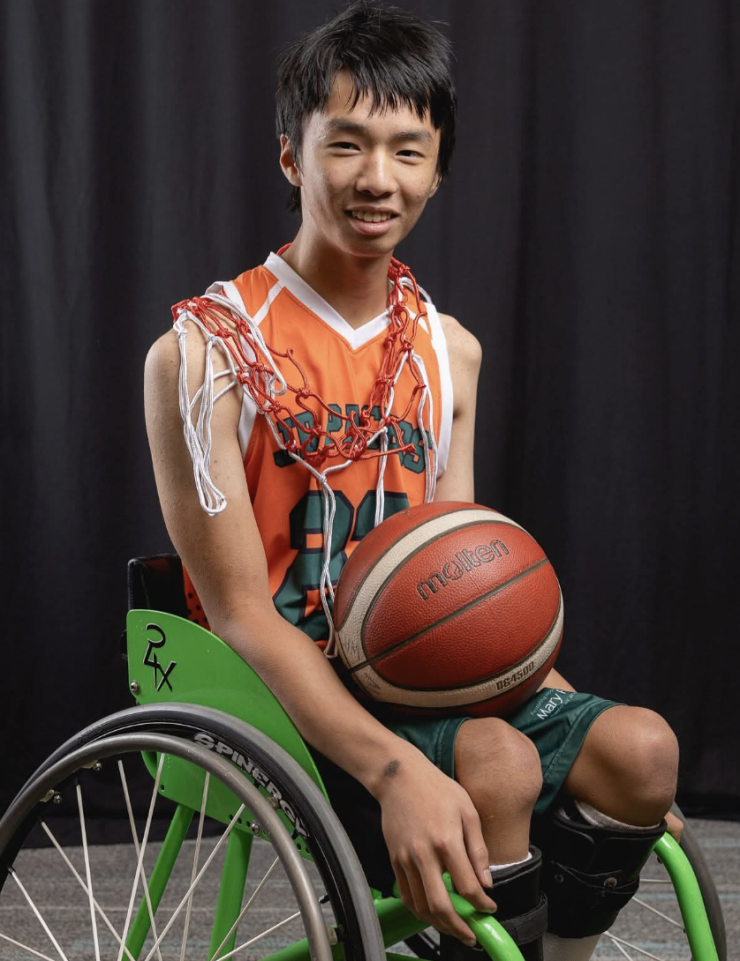
Wheelchair basketball has become something of a first love for Bryan, who turns 16 this September. He plays varsity for the Mary Free Bed Junior Pacers, which means Sandy drives him an hour and a half each way to practice in Grand Rapids. During basketball season, there are tournaments throughout the Midwest, too — Ohio, Indiana, Illinois, Wisconsin.
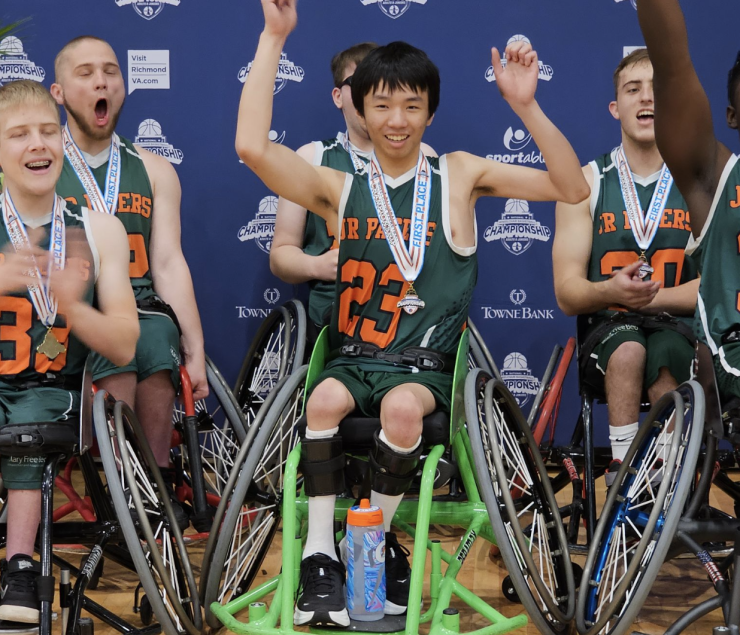
And Bryan loves every bit of it.
He’s tried plenty of other adaptive sports at camps — lacrosse, football, handball, dodgeball, cycling, track and field. But when Sandy would text him at the end of the day and ask which had been his favorite, the answer never changed.
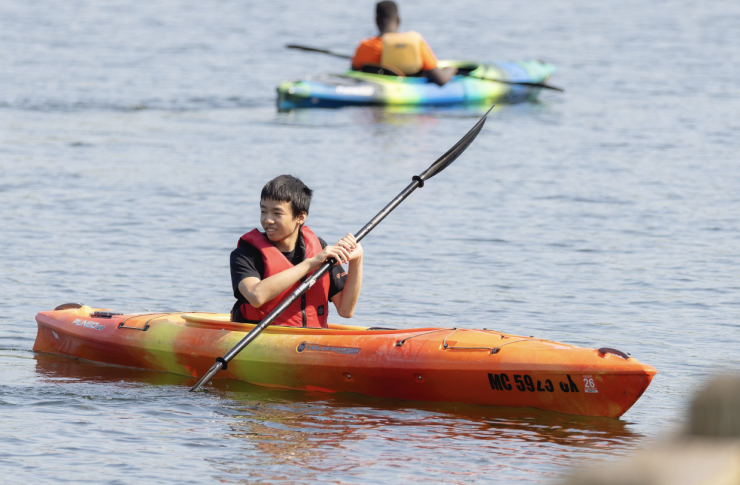
Basketball.
Maybe it’s genetic. Eric played small college basketball, his brother played professionally for 15 years, and Bryan’s cousin now plays professionally overseas.
Or maybe Bryan simply found a place where being competitive felt good, because much of Bryan’s life has required learning to adapt.
Eric and Sandy started their family with four biological children, but along the way, four kids became nine. They adopted five more children, including Bryan, who joined the Kreps family from China when he was four years old. Their youngest three children all came home from China, while two others joined the family through domestic adoption.
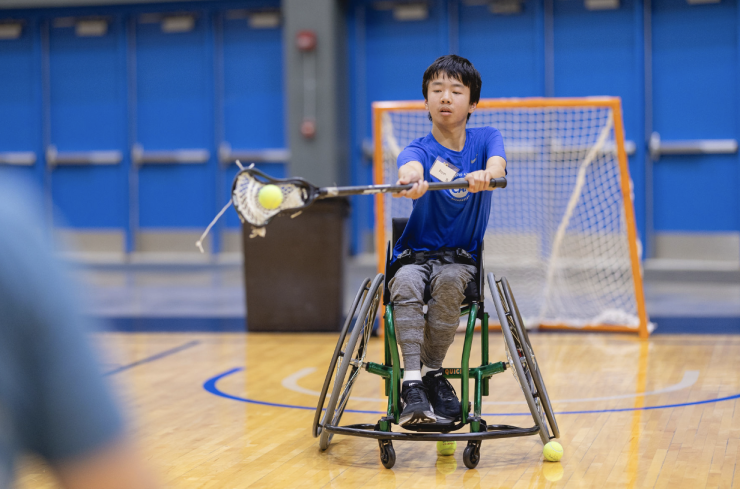
For two decades, Sandy homeschooled their growing crew. There were years when the family needed a 12-passenger van just to get everyone from Point A to Point B, and Eric jokes that once they reached four kids, they basically “outsized being invited places.”
Today, their oldest is 30, four children remain at home, and somehow, after decades of raising nine kids, Eric and Sandy can actually see the possibility of an empty nest on the horizon.
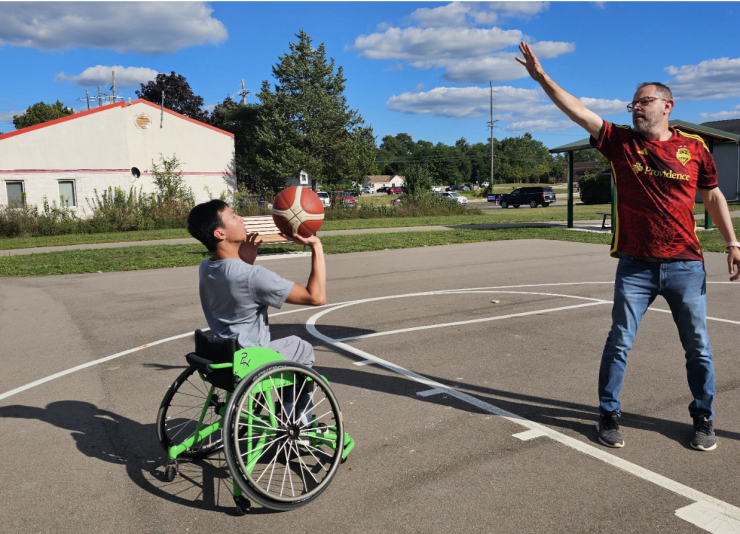
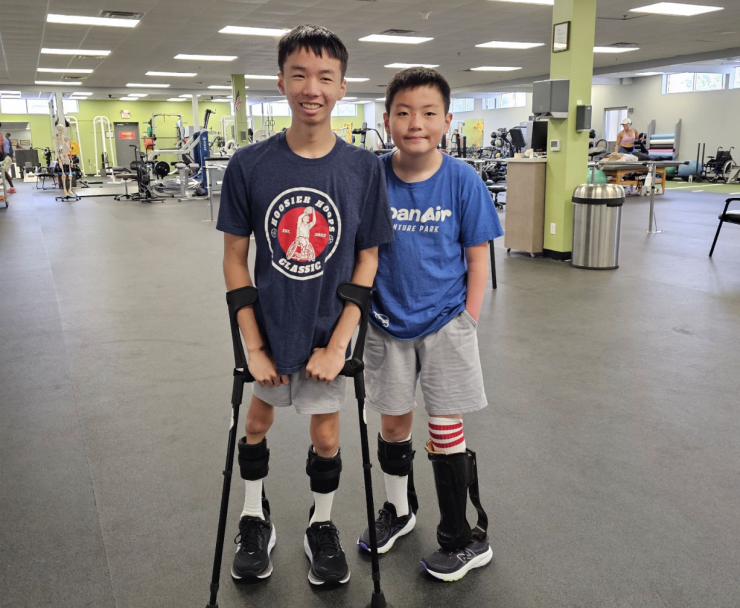
As for Bryan and his medical needs, an exact diagnosis remains uncertain; doctors currently suspect post-viral myelitis, possibly polio. What they do know is that the condition affects muscles throughout his body, leaving Bryan with significant weakness in his legs, core and arms. He isn't independently mobile and relies on forearm crutches or a wheelchair to get around.
Even the crutches were once something his family didn't know would be possible.
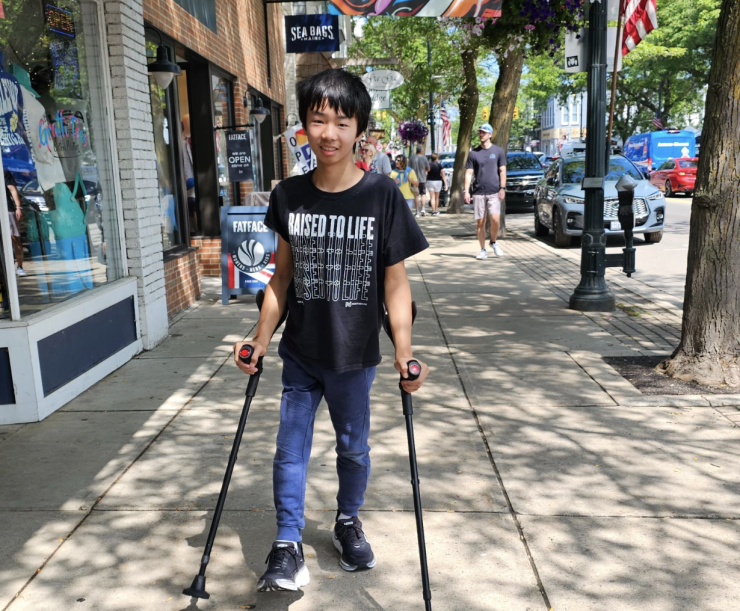
A few years ago, Sandy took Bryan to a clinic in Florida for new braces. He arrived in a wheelchair, and when clinicians suggested he might leave walking with forearm crutches, Sandy worried they were setting him up for disappointment.
By the end of the visit, Bryan walked out on them.
He hasn't looked back.
Now, at almost 16, he's approaching another milestone: driving.
For most teenagers, driver's ed is a rite of passage. For Bryan, it requires specialized instruction, physical therapy and a vehicle equipped with professionally installed hand controls. His right hand will steer using a knob on the wheel while his other hand operates the gas and brake.
And all of it comes at a significant additional cost simply because Bryan's body operates differently. Sandy told us that one driving lesson with adaptive hand controls costs around $600.
But, much like Bryan on a basketball court, this is an area where Chive Charities thrives.
With a $2,600 grant, we're covering the hand controls that will allow Bryan to drive the family's Honda CR-V. There's enough room in the back for his wheelchair without breaking it down, and the controls can move out of the way when Sandy needs to drive.
At the end of the day, though, this isn't really about a car.
It's about Bryan being able to text a friend and go meet them. Drive himself to the gym. Get himself to basketball practice.
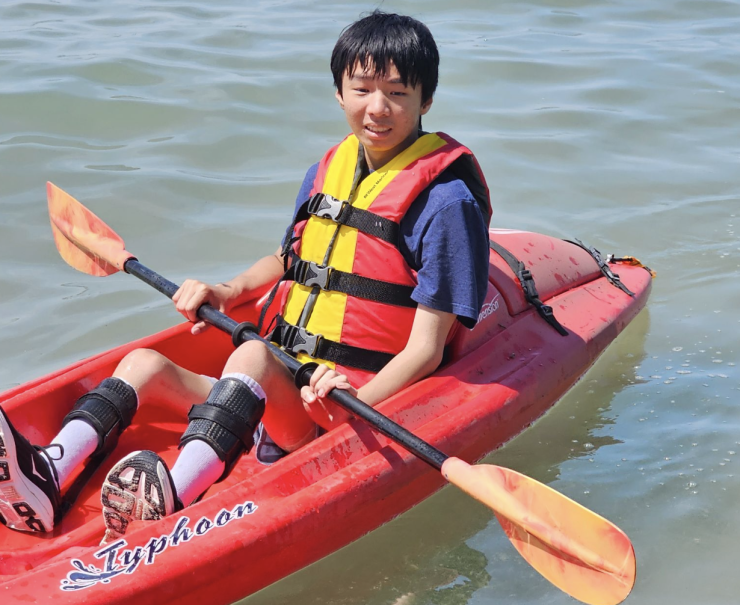
Decide where he wants to go — and go.
For Eric, there's something beautifully familiar about that possibility.
When Bryan first joined their family, he would watch his siblings and neighborhood kids playing outside. He wanted to join them, but his walker couldn't navigate the grass. So he'd stay nearby, mimicking what the other kids were doing, almost playing alongside them without actually being able to get there.
Then someone gave Bryan one of those little battery-powered ride-on cars, and suddenly, the grass wasn't an obstacle anymore. He could simply drive across the yard and join the other kids.
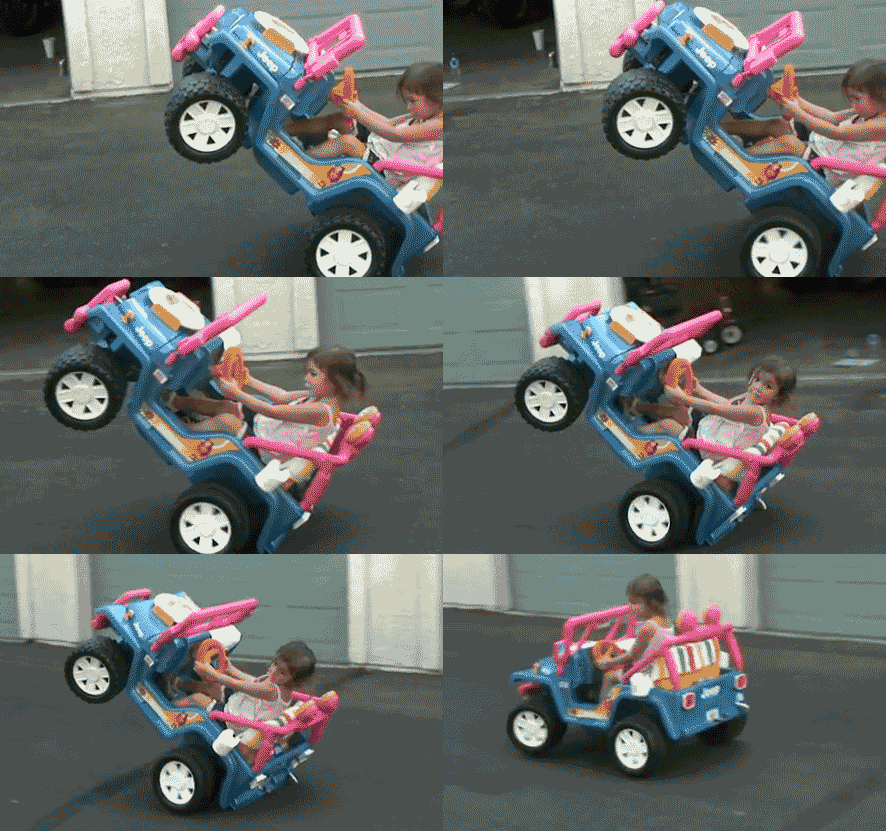
“I can just see this as something similar now that he's bigger,” Eric told us. “He won't have to just hear about what his friends are doing. He can go and join them.”
Twelve years later, Bryan has a much bigger set of wheels waiting for him. Soon, he'll be able to load his wheelchair or crutches into the back, get behind the wheel and decide for himself where he's headed.
Maybe he’ll drive to meet up with his friends. Maybe he’ll head to the gym. Or if the urge strikes him, he could go somewhere entirely new.
But if we had to guess, we'd put our money on the basketball court.
For Eric and Sandy, watching Bryan reach this milestone carries a little extra weight. They’ve spent decades raising nine children and finding ways to make sure each of them has the opportunity to participate fully in the world around them — even when doing so requires extra equipment, extra travel, extra expense or a little extra creativity.
“We have been very blessed to be able to get help,” Sandy told us. “With our bigger family, we haven’t had extra funds for these things.”
That help, she said, has allowed their youngest children to simply “be kids” and experience the same things their older siblings have been able to enjoy.

And that’s exactly what this grant is about.
Bryan's $2,600 grant was possible because members of the Chive Charities family decided to get in the game. Maybe it was $10. Maybe $25. Maybe more. But when enough people show up, those donations become hand controls. Or wheelchairs, prosthetics, or accessible vehicles.
They become the things that help people like Bryan spend less time watching from the sidelines and more time deciding for themselves where they want to go.
We can’t thank you enough for being part of this with us.
And still, there are more Chive Charities recipients sitting on the bench, waiting for their turn.
Donate today and help us keep putting possibility within reach. Because when the next Bryan is ready to take their shot, we want to make sure someone is there with the assist. DONATE HERE.